top of page

The Philippine Constitution is often interpreted as strictly prohibiting foreigners from owning land. While this is generally true, the legal framework tells a more nuanced story—especially for former Filipino citizens.


In fact, former natural-born Filipinos retain a legally recognized pathway to acquire real property in the Philippines. This is not a loophole or workaround. It is a deliberate policy embedded in Philippine law, designed to maintain ties with Filipinos who have acquired foreign citizenship.


Understanding this distinction is critical for overseas Filipinos, balikbayans, and investors navigating the Philippine real estate market.


The Constitutional Rule—and Its Exception


The starting point is the 1987 Constitution, which clearly provides that ownership of private land is reserved for Filipino citizens and corporations that are at least 60% Filipino-owned. This establishes the general rule: foreigners cannot own land.


However, the Constitution itself also creates an important exception. It allows Congress to define circumstances under which former natural-born Filipino citizens may acquire private land.


This is where statutory law comes into play.


The Legal Basis for Ownership


Two key laws govern the rights of former Filipino citizens to own real property:


Batas Pambansa Blg. 185

This law allows former natural-born Filipinos to acquire private land for residential purposes. It recognizes that individuals who were Filipino by birth maintain a continuing connection to the country, even after naturalization abroad.

Under this law, a former Filipino may acquire:

  • Up to 1,000 square meters of urban land, or

  • Up to 1 hectare of rural land

The property must be used for residential purposes.

Republic Act No. 8179

Republic Act No. 8179 expanded these rights by allowing former natural-born Filipinos to acquire land for business or commercial purposes.

The allowable limits are significantly higher:

  • Up to 5,000 square meters of urban land, or

  • Up to 3 hectares of rural land

This opened the door for returning Filipinos to actively participate in economic activity, including real estate development and entrepreneurship.


Ownership Limitations Still Apply


While the law grants ownership rights, it does not place former Filipinos on exactly the same footing as current citizens—unless they reacquire citizenship.

Several limitations must be observed:

First, land acquisition is generally limited to a maximum of two lots, and these must be located in different cities or municipalities.

Second, the total land area must not exceed the statutory limits. These limits apply even if the buyer acquires property over time.

Third, if married to a non-Filipino spouse, the total landholding of the couple must still comply with the same ceilings.

These restrictions reflect a balancing act: allowing reconnection and investment, while preserving the constitutional policy of Filipino land ownership.


Condominium Ownership: A Separate Track


Former Filipino citizens also have access to condominium ownership under a different legal regime.

The Condominium Act allows foreigners—including former Filipinos—to own condo units, provided that foreign ownership in the entire project does not exceed 40%.

This means condominium investment is often the simplest entry point for former Filipinos who want fewer legal constraints.


Reacquiring Citizenship: Full Ownership Rights


For former Filipinos who want unrestricted property ownership, the most powerful legal tool is Republic Act No. 9225, also known as the Citizenship Retention and Re-Acquisition Act.

Once Philippine citizenship is reacquired, the individual regains full rights as a Filipino citizen. This includes the ability to acquire land without the area limitations imposed on former citizens.

In practical terms, dual citizenship removes most structural barriers to real estate investment.


Strategic Implications for Investors


The legal framework sends a clear message: the Philippines encourages former Filipinos to reinvest in the country—but within defined boundaries.

For residential buyers, the law provides enough flexibility to build or acquire a home.

For entrepreneurs, Republic Act No. 8179 creates a viable path to own land for business use.

For long-term investors, reacquiring citizenship remains the most strategic move, unlocking full ownership rights and simplifying transactions.


Final Thought


The idea that “foreigners cannot own land in the Philippines” is only half the story.

Former Filipino citizens occupy a unique legal position—one that blends constitutional restriction with statutory privilege. When properly understood, this framework does not hinder investment. It enables it, with clarity and purpose.


  • Writer: Ziggurat Realestatecorp
    Ziggurat Realestatecorp
  • Apr 19
  • 5 min read

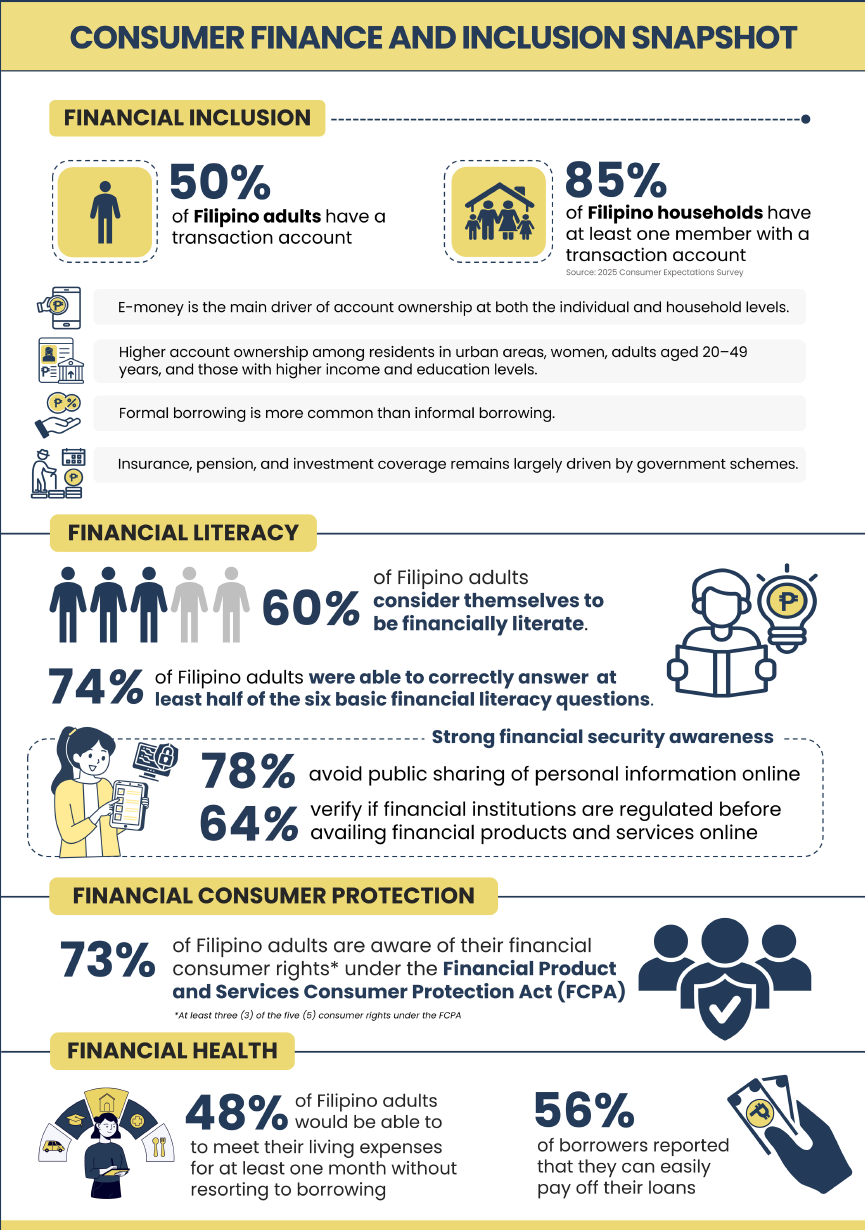
Half of Filipino adults had formal financial accounts in 2025, with gains recorded among the youth and women, a Bangko Sentral ng Pilipinas (BSP) survey showed.


According to the BSP’s 2025 Consumer Finance and Inclusion Survey (CFIS) released this week, 50% of Filipino adults owned bank, e-wallet, and other types of transaction accounts in 2025, down from 56% in 2021.


“This was partly driven by a decrease in transaction accounts linked to loans, particularly from microfinance institutions and cooperatives. This trend was consistent with the lower incidence of borrowing from these institutions,” the central bank said.


Adults with accounts with microfinance institutions and cooperatives went down to 5% and 2% last year, respectively, from 9% and 5% in 2021, the data showed.


“This decrease was aligned with lower loan incidence in these institutions: microfinance NGOs (nongovernment organizations) from 10% in 2021 to 6% in 2025, and cooperatives from 4% to 1% over the same period.”


Meanwhile, ownership of e-money and bank accounts remained steady at 36% and 23%, respectively.


At the household level, account ownership continued to grow, with 85% of households having at least one account in 2025, up from 74% in 2024, data from the BSP’s Consumer Expectations Survey (CES) showed. “While account ownership is uneven individually, household-level access is strong… This suggests that many families rely on shared financial access rather than individual account ownership.”


The BSP noted that women have surpassed men in ownership of more sophisticated accounts like bank accounts, which shows greater gender parity. Bank account ownership among Filipino women increased to 25% in 2025 from 20% in 2021, while men’s share stood at 22% last year versus 26% over the same period.


“Filipino women have consistently recorded higher account ownership than men since 2017, driven by the support of microfinance NGOs and in recent years, the expansion of e-money wallets and bank accounts,” it said.


“Beyond gender differences, disparities persist across income, education, and geography. Higher-income, better-educated adults are significantly more likely to own accounts. Regional differences remain pronounced, with urbanized regions showing higher ownership than predominantly rural areas.”


Account ownership among young adults aged 15 to 19 also rose to 34% in 2025 from 27% 2021, the central bank said, showing financial inclusion gains.


E-money was the main driver of account ownership at both the individual and household levels.


Digital finance also continues to grow as 62% of households said they used electronic devices for online financial transactions in 2025, rising from 53% in 2024, according to the CES.


This was driven by high levels of smartphone ownership, which rose to 86% in 2025 from 81% in 2021. The survey also showed that in 2025, 89% of Filipino adults said they use the internet, up from 77% in 2021, with over half (55%) doing so via mobile data.


“The BSP continues to work with government, private sector, and development partners under the National Strategy for Financial Inclusion 2022 to 2028 to broaden access to financial services. These efforts promote digitalization, financial literacy, consumer protection, and trust in the formal financial system, helping improve the financial health of all Filipinos.”


BORROWING, INVESTMENT


Meanwhile, the report also showed that formal borrowing is now more common than informal borrowing, showing progress toward “safer and more regulated” credit markets.


“While fewer Filipino adults are borrowing, at 25% in 2025 from 45% in 2021, the source of borrowing shifted from informal lending sources to safer and more regulated formal loans. In 2025, 16% of the total adult population borrow from formal channels such as banks, while only 10% relied on informal lenders. This marks a reversal from 2021, when informal borrowing was more common,” the BSP said.


Microfinance institutions remained the primary source of loans, but online lending platforms have also expanded their reach as more borrowers prioritize fast loan processing and approval. Other important borrowing considerations are repayment period, interest rate, and ease of application.


“Personal loans are the most common, followed by salary loans, multipurpose loans, and business loans. Many continue to rely on borrowing to meet basic needs such as food, education, and health expenses,” the BSP said.


“Most borrowers demonstrated sound repayment behavior, with a majority paying on time or ahead of schedule. However, a sizable minority reported difficulty in repayment.”


Meanwhile, overall insurance coverage and pension participation among Filipino adults continues to be largely driven by government-led schemes. Voluntary insurance uptake remains limited, especially among lower-income and less-educated groups, it said.

The data also showed that only 23% of adults reported having an investment in 2025, down from 36% in 2021.


“Overall investment participation declined compared with earlier years, and voluntary investment activity remains low, reflecting constrained disposable income and limited risk appetite among many adults,” the central bank said. “Investment participation is concentrated among higher-income, better-educated, and older adults, with motivations centered on achieving life goals and preparing for emergencies.”


Progress was also seen in several aspects of financial health, but it noted that low income and less educated individuals remained vulnerable in terms of stability. “Challenges persist in emergency preparedness and in maintaining adequate liquidity to manage potential income shocks.”


LITERACY GAINS


Despite this, Filipinos’ financial literacy and capability have improved, the report showed.

In 2025, 74% of the surveyed adults were able to correctly answer at least half of the six financial literacy questions, improving from 69% in 2021. “Understanding of risk and diversification is relatively strong, while knowledge of interest rates — particularly compound interest — continues to lag,” the BSP said.


Meanwhile, 86% said they have a personal budget, but financial confidence remains limited, with only 43% of adults feeling satisfied with their current situation.


“This shows that financial control does not always translate into financial confidence or resilience. When given extra funds, households prioritize emergency savings and family support, reflecting strong social values but also highlighting limited capacity for formal saving and investment.”


Awareness of financial products and services is also high, with increased interest seen for virtual assets. “Filipinos also demonstrate strong financial security awareness. Around 78% avoid sharing personal information online, while 64% verify if financial institutions are regulated before transacting,” the BSP added.


Most are also aware of their consumer rights, it said.


The 2025 CFIS has 8,784 completed interviews of adult respondents aged 15 years old and above across all regions of the Philippines, The survey was conducted from Feb. 16 to July 24, 2025.


“The 2025 CFIS highlights that financial inclusion in the Philippines has achieved broad reach, particularly through digital channels and household-level access. However, the findings also make clear that access alone is insufficient,” the BSP said.


“Sustained efforts are needed to deepen usage of financial products and services beyond transaction accounts, improve financial capability, and enhance consumer protection.”


The License to Sell (LTS) is one of the most important documents in Philippine real estate, yet in 2026 it has quietly become a bottleneck for both housing supply and sales. Developers in Cebu and other key markets are now publicly urging the Department of Human Settlements and Urban Development (DHSUD) to fast‑track LTS releases, warning that slow approvals are delaying project launches, cash flow, and the delivery of badly needed housing units. For buyers, especially OFWs and first‑time homeowners, these bureaucratic delays can translate into longer waits, greater uncertainty, and higher risk if they commit to projects that are not yet fully cleared.


What the License to Sell actually does


An LTS is not a mere formality; it’s the government’s way of confirming that a project meets minimum legal, technical, and financial requirements before it can be sold to the public.

In practical terms, a valid LTS means:

  • The developer has submitted and secured key permits (development permits, zoning clearances, environmental approvals where required).

  • The project’s plans and specifications have been reviewed and accepted by DHSUD.

  • The developer is authorized to advertise, accept reservations, and sign contracts to sell for that specific project.

Without an LTS, any “selling” activity is essentially premature, and buyers who enter into deals at that stage are taking on unnecessary regulatory risk.


Why developers are pushing DHSUD to move faster


Recent reports highlight that developers—particularly in Cebu—are raising concerns over the slow release of LTS for new projects. These delays have several knock‑on effects:

  • Capital and cash‑flow strain:Developers cannot legally sell units without an LTS, which means they may have land and early works financed but no revenue coming in. This weakens their ability to fund construction and may delay subsequent phases.

  • Housing backlog pressure:When LTS approvals drag, projects that could add supply to the market are stuck in the pipeline. For a country with a multi‑million‑unit housing backlog, every month of delay compounds the shortage.

  • Higher project risk:Longer pre‑revenue periods raise carrying costs (interest, taxes, overhead), which can in turn pressure developers to increase prices later or cut corners to recover margins.

From the developer’s side, the call is simple: streamline LTS processing so legitimate projects can launch and deliver units on schedule.


Risks for buyers when LTS is delayed


For Filipino buyers and OFWs, LTS delays create both risk and opportunity. The risks are more obvious:

  • Regulatory uncertainty:Buying into a project that still has no LTS means you’re betting that all the permits, clearances, and technical requirements will eventually be approved. If DHSUD later finds issues, approvals can be slowed or conditions may change.

  • Longer waiting times:Even when marketing has started, a project with pending LTS may see delays in actual construction schedules and turnover dates, affecting families who are timing moves, rentals, or business plans around the new unit.

  • Weaker negotiating position:If you’ve paid a reservation fee before LTS is officially out, your leverage to renegotiate or cancel can be weaker, especially with less reputable developers.

Because of this, a “DHSUD‑aware” buyer should always treat the LTS as non‑negotiable due diligence, not an optional document.


How smart buyers should adjust in 2026


Given the current environment, here are practical moves for buyers:


1. Always verify the LTS before committing


  • Ask the developer or agent for the exact LTS number and project name.

  • Check against DHSUD regional office or official online channels if available.

  • Be wary of phrases like “for processing” or “almost approved” without proof.

If the project doesn’t have LTS yet, treat your reservation as high‑risk money and avoid paying large sums up front.


2. Favor developers with strong compliance track records


  • Established developers with a history of on‑time LTS issuance and turnover are generally safer.

  • For smaller or newer players, demand more documentation and be more conservative with unit choice and payment structure.

Developer risk is now as important as location risk.


3. Negotiate timelines and protective clauses


  • For projects with pending LTS, negotiate for:

    • Refundable reservation fees if LTS is not issued within a specific period.

    • Clear clauses around turnover dates and remedies for delays.

  • This is particularly important for OFWs who are timing deployment, schooling of kids, or retirement plans around specific turnover years.


Implications for developers and investors


For developers, the current LTS bottleneck is a signal to upgrade internal processes and regulatory strategy:

  • Pre‑emptive compliance:Getting all technical and documentary requirements complete and clean before submission can reduce back‑and‑forths with DHSUD and shorten turnaround times.

  • Better buyer communication:Transparent updates on LTS status build trust. Silence erodes confidence, especially among more informed buyers and OFWs.

  • Staggered project phasing:Structuring project launches to align with realistic LTS timeframes can reduce capital strain and prevent over‑promising on turnover.

For investors (especially those eyeing developer stocks or REITs), LTS delays can be a leading indicator of which developers manage regulatory risk well and which ones may face bottlenecks in launching new inventory.


How this might reshape the 2026–2027 housing landscape


If LTS delays persist without reforms, the effects could include:

  • Slower rollout of new subdivisions and mid‑market condos in growth areas like Cebu, Davao, and parts of Luzon.

  • Increased pressure on existing inventory, particularly in well‑regulated, popular townships and established projects.

  • Greater differentiation between compliance‑strong, capital‑strong developers and smaller, under‑capitalized players.

On the other hand, if DHSUD responds by streamlining internal processes, digitalizing workflows, and clarifying standards, LTS can move from being a bottleneck to a quality filter that boosts confidence in compliant projects.


© Copyright 2018 by Ziggurat Real Estate Corp. All Rights Reserved.

  • Facebook Social Icon
  • Instagram
  • Twitter Social Icon
  • flipboard_mrsw
  • RSS
bottom of page